Vivo V60 — Introduction
Vivo launched the V60 in August 2025 as the next iteration in its V-series (mid-/upper mid-range, photography-focused). The V60 is aimed at users who want strong camera hardware, large battery life, modern performance, and premium touches (IP ratings, fast charging), without going into absolute flagship pricing. Vivo emphasizes ‘ZEISS’ camera co-engineering, AI imaging tools, durability, and a refined design.
Official Price & Variants (Pakistan)
- 12 GB + 256 GB variant → PKR 149,999
- 12 GB + 512 GB variant → PKR 159,999
At launch, Vivo also announced that the device will be available in Pakistan via pre-orders and then via retail from 30 September.
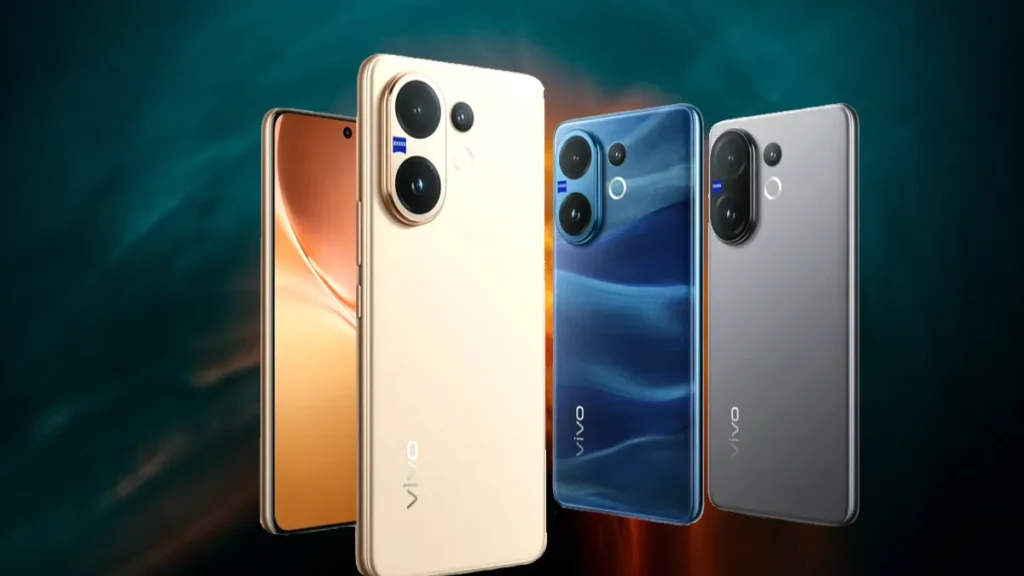
Confirmed Specifications & Features of Vivo V60
Below is a refined / confirmed specs sheet for the Vivo V60 :
| Category | Specification / Feature |
|---|---|
| Display | 6.77-inch AMOLED (curved on edges) Resolution: 2392 × 1080 pixels (i.e., ~FHD+) Refresh rates supported: 60 Hz / 90 Hz / 120 Hz Local peak brightness: 5,000 nits |
| Processor / Platform | Snapdragon 7 Gen 4 (4 nm process) CPU configuration: 1 × 2.8 GHz + 4 × 2.4 GHz + 3 × 1.8 GHzRAM / Storage options: 12 GB + 256 GB, 12 GB + 512 GB (non-expandable) Extended / virtual RAM (software) supported |
| Battery & Charging | Capacity: 6,500 mAh (typical) Charging: 90 W FlashCharge (wired) ttery technology: “BlueVolt” battery naming by |
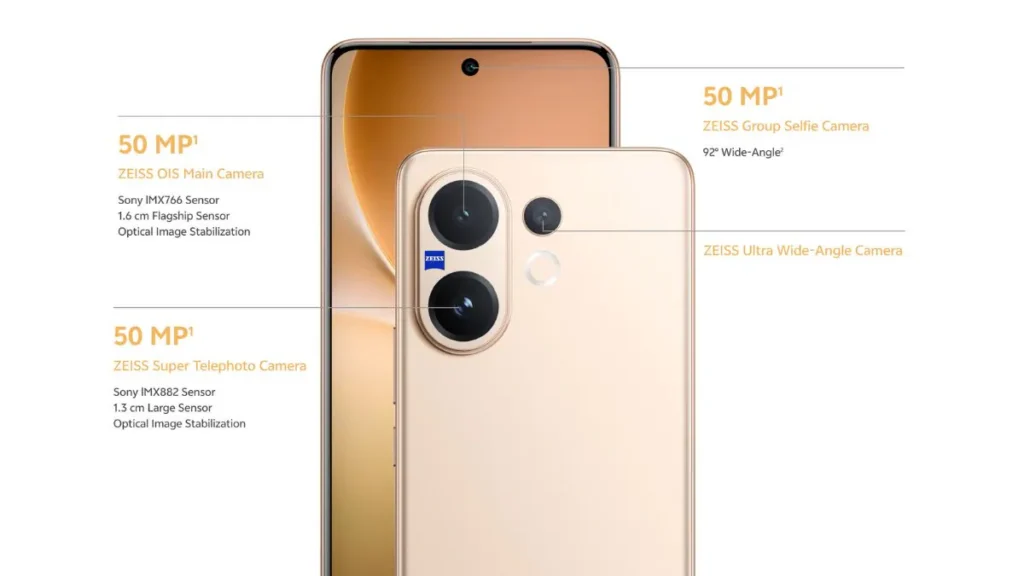
| Cameras | Rear / Main: 50 MP (ZEISS, OIS, f/1.88) Rear / Telephoto: 50 MP ZEISS super telephoto (periscope-style) Rear / Ultra-wide: 8 MP ZEISS (f/2.2) Front (Selfie): 50 MP ZEISS (f/2.0) Video support: Up to 4K recording (front and rear) |
| Build, Durability & Design | IP68 & IP69 ratings for water & dust resistance Glass / back: Desert Gold version uses glass; Mist Gray may use composite sheet (plastic composite) in some parts Dimensions: 163.53 × 76.96 × 7.53 mm (Gray) / 7.65 mm (Gold) Weight: ~192 g (Gray) / ~200 g (Gold) Fingerprint: In-display optical sensor |
| Software & Features | Android 15 + Funtouch OS 15 AI imaging features: AI Erase, AI Image Studio, AI Four-Season Portrait, AI detail recovery, etc. Display software modes (curved edges, anti-mistouch, etc.) Connectivity: 5G (dual SIM), Wi-Fi, Bluetooth 5.x, NFC (region-dependent) |
| Other / Extras | One-tap water ejection (sound-based) to remove water / moisture from ports Drop / impact protection: “Diamond Shield” glass, internal cushion structure Dual stereo speakers (reported) |
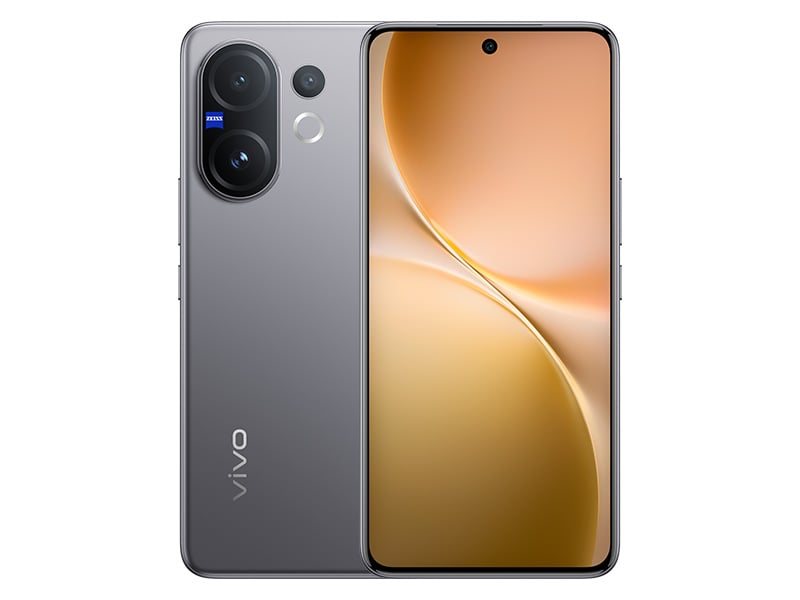
Vivo V60 — Pros & Cons
Here are the strengths and some trade-offs / downsides of the V60:
Pros
- Strong camera upgrades: The addition of a periscope / super telephoto lens (50 MP, 3× optical zoom) is a big boost over models without telephoto. Good for zoomed shots.
- Large battery: 6,500 mAh is generous; likely to give excellent real-world endurance. Combined with 90W charging, charging times will be short.
- High display brightness: Good visibility outdoors; HDR10+ support; a curved design gives a premium feel.
- Durability: IP68/IP69 plus strong glass protection helps make the phone more robust.
- Modern performance: Snapdragon 7 Gen 4 is efficient, powerful enough for upper-midrange performance; adequate for gaming, multitasking.
- AI features and software polish: Many camera and usability enhancements, live translation etc., add value beyond pure hardware.
Cons
- Lack of wireless charging (in many reports) — if you prefer this feature, this could be missing.
- Ultrawide camera weaker: Only 8 MP, and sometimes without autofocus; video on ultrawide may be capped at 1080p in some use cases.
- Plastic frame or non-premium materials in some parts in some variants / regions (depending on colour / finish). (Some reports mention weight, frame build, but not always premium metal for frame.)
- No memory card slot. If you like expandable storage, it’s missing.
- Large size & weight: At ~190-192 grams with a large screen and big battery, ergonomics may suffer for those who prefer compact phones.
- Some missing features (depending on region): possibly no stereo speakers or wireless charging; no 3.5 mm headphone jack.
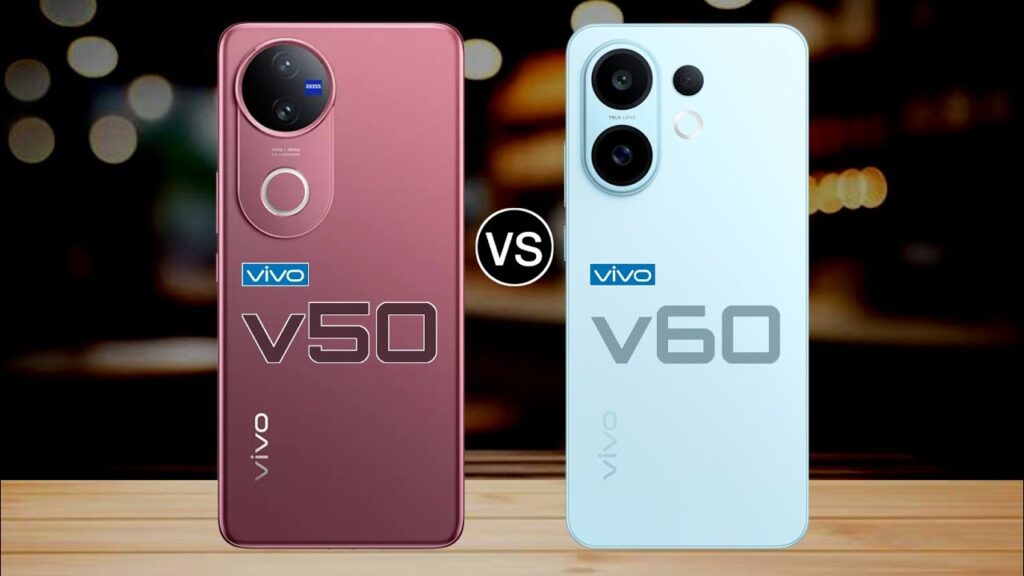
Comparison: Vivo V60 vs Vivo V50
Here’s how the V60 stacks up against its predecessor V50: what’s better, what’s similar, what’s lacking.
| Feature | Vivo V50 | Vivo V60 — Improvements / Changes |
|---|---|---|
| Processor / Performance | Snapdragon 7 Gen 3 (4nm) in V50 | Upgraded to Snapdragon 7 Gen 4. Vivo claims ~27% faster CPU, ~30% better GPU performance. |
| Battery | ~6,000 mAh in V50 | Increased to ~6,500 mAh in V60; about +500 mAh. Longer usage. |
| Charging Speed | 90W FlashCharge in both V50 and V60 | Same 90W in V60. Charging times similar; though more energy needed for larger battery. |
| Display | V50: ~6.77 in, 120Hz, ~4500 nits (peak) brightness. | V60: similar size, same refresh rate, but higher peak brightness (~5,000 nits) in many reports. Slight improvement in outdoor visibility. |
| Camera | V50: Dual rear cameras — 50 MP main + 50 MP ultrawide; no telephoto. | V60 adds a telephoto periscope 50 MP lens with OIS and optical zoom (~3x). Ultrawide is reduced to 8 MP (but main & telephoto strong). Better zoom shots. |
| Durability / Build | V50: IP68/IP69, Diamond Shield Glass, curved screen, decent build. | V60 continues IP68/IP69, with build refinements. Slightly slimmer in some dimensions / finishes. More protection and better brightness. |
| Software & Features | Both have Android 15 + Funtouch OS; V50 has fewer advanced AI features. | V60 includes more AI tools, image processing, zoom/distant detail recovery, etc. Better software polish. |
Should You Go for V60 over V50? What Matters
- If you value zoom photography, the telephoto lens in V60 is a strong reason to upgrade.
- If battery life is important, the extra 500 mAh plus efficient chip gives you more margin.
- If you are outdoors a lot (sunlight visibility), the brighter display in V60 helps.
- If you are cost sensitive, you might see the V50 for less money; depending on region, the trade-offs might be acceptable (losing telephoto, slight drop in brightness, smaller battery).
- If features like wireless charging, ultrawide video, stereo speakers matter, check in your region — sometimes newer model may not have improved in those.